Why panel diversity matters more than ever
Diverse interview panels are not a tick-box exercise. When they are done well, they change the decisions you make.
They change the candidate experience. They change the culture signal your organisation sends into the market.
Panels that reflect a mix of genders, cultural backgrounds, ages, career paths and perspectives can spot strengths and risks that a homogenous group might overlook.
They reduce the likelihood of one narrow definition of “fit” dominating the conversation.
And they tell candidates, in a single glance, that your organisation values diversity enough to make it visible in decision-making.
Of course, a panel can be diverse on paper yet still fall into the same groupthink as any other. The difference is in how that panel is chosen, prepared and involved.
This inclusive interview panels tip shows you how to build teams that genuinely contribute to better inclusive hiring processes and outcomes.
Register for our online Inclusive Recruitment course.
Or contact us for tailored support.
The problem with token diversity
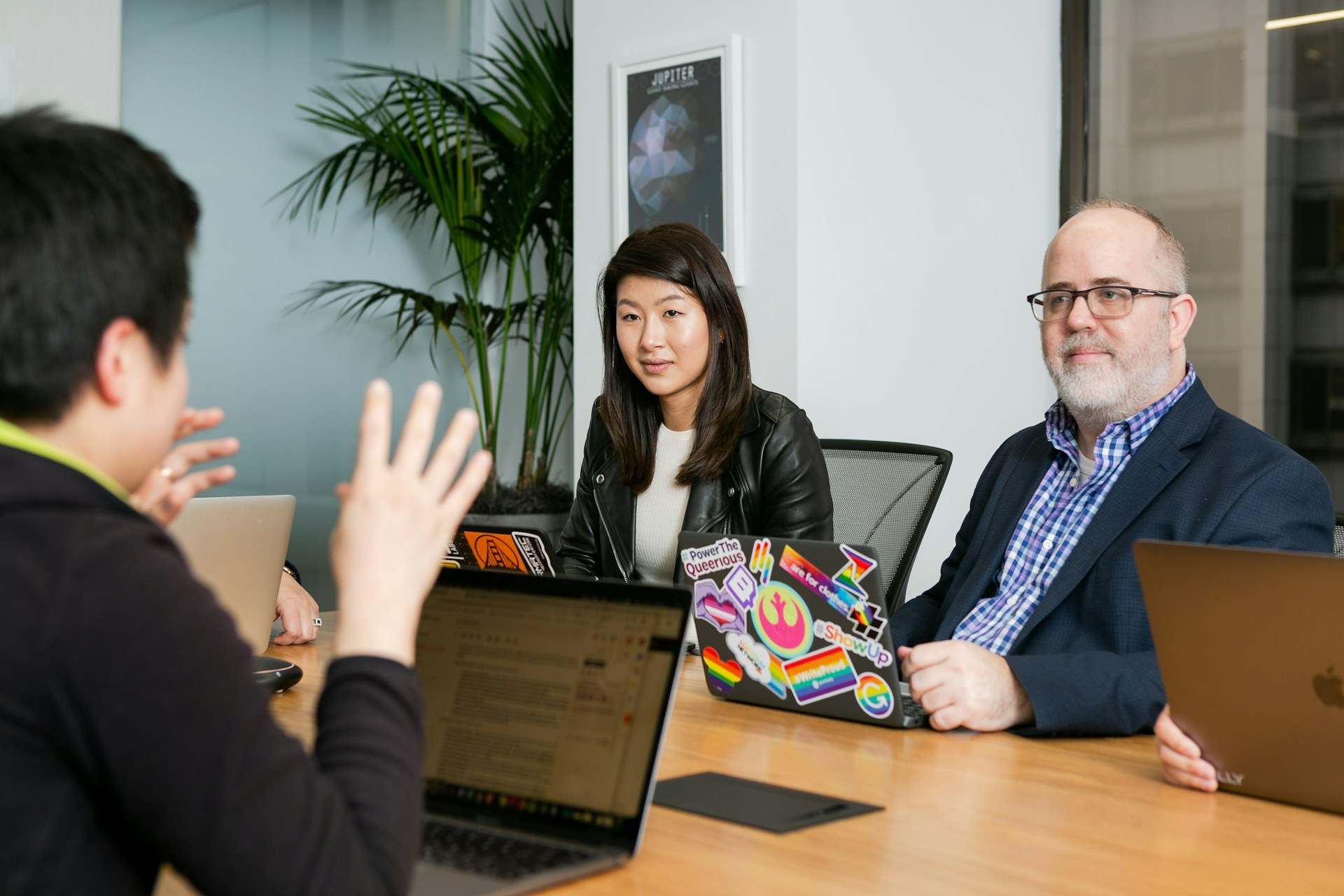
Some organisations add one person from a different background to an otherwise uniform panel and call it diversity. The intention might be good, but the reality is underwhelming.
If that person is not briefed properly, not empowered to speak up, or simply outnumbered in every vote, the impact is minimal.
Worse, they may feel they are there to “represent” a whole demographic, rather than to contribute their expertise.
The goal is not to tick a representation box. The goal is to create a group of interviewers who genuinely bring different lenses to the evaluation process – and have equal weight in the decision.
How diverse panels influence hiring outcomes
People notice different things. A panel member who has navigated career breaks might see potential in a candidate with a patchy CV that others overlook.
Someone from a non-technical background might focus on communication skills that a specialist interviewer misses.
These perspectives can be the difference between passing over a great hire and recognising their value. It also changes the dynamic in the room.
Candidates may feel more comfortable, open and authentic when they see someone who reflects their own identity or experience. That comfort can produce a more accurate picture of their abilities.
Building a panel that actually works
Start by defining what diversity means in your organisation’s context. For some, it is primarily about gender balance.
For others, it is cultural and linguistic background, or representation from different functions, seniority levels and working styles. The mix should be deliberate, not accidental.
Then, look at panel size. Too small and you will lack variety; too large and it becomes unwieldy. Three to five is often the sweet spot – enough to allow different viewpoints without overwhelming the candidate or slowing decisions to a crawl.
Do not just pull the same names every time. Rotate members to avoid “gatekeeper” syndrome and to give more people exposure to recruitment experience.
Preparing the panel for inclusive interviews
Diversity without preparation will not deliver better results. Every panel member should understand the role requirements, the scoring criteria and the structure of the interview. If you have bias-awareness training available, this is where it should be applied.
Make sure each panel member knows their role in the conversation. One might focus on technical capability, another on leadership potential, another on values alignment.
By dividing focus, you increase coverage and reduce the risk of multiple people asking the same questions while missing others entirely.
Balancing influence and avoiding hierarchy traps
Power dynamics can undermine even the most diverse panel. If one member is significantly more senior than the others, their opinion can dominate – whether they mean it to or not.
To counter this, use independent scoring before discussion. Ask each panel member to record their evaluation individually, then compare. This makes it easier to spot where perspectives diverge and to discuss the reasons openly.
Using AI and technology to support diversity in panels
Linking back to Tip #2 and Tip #3, technology can help in creating and managing diverse panels. Scheduling tools can rotate panel members automatically to maintain variety.
AI tools, if properly safeguarded, can generate anonymised candidate summaries so the panel sees only job-relevant details.
This reinforces fairness in the panel’s work – they are diverse, and they are all looking at the same unbiased information before forming an opinion.
Measuring the impact of panel diversity
Track the diversity of hires coming through panel interviews. Compare against single-interviewer hires. Ask candidates about their experience – do they recall the panel as balanced, fair and representative?
You may also find that panel diversity improves the organisation internally. Interview experience often builds skills, confidence and visibility for employees who might otherwise be overlooked for leadership roles.
Final thought
A diverse interview panel is more than a visual signal. When chosen deliberately, prepared properly and given equal voice, it improves decision-making, strengthens your employer brand and creates a more inclusive candidate experience.
The key is to move past optics into practice – building panels that contribute, challenge and change outcomes for the better.
Register for our online Inclusive Recruitment course.
Or contact us for tailored support.