Inclusive Interview Process Tip #5: Focus on Skills Demonstration Over Performance

Why interview performance can be misleading


Interviews can be deceptive.

A confident handshake, a smooth answer to “tell me about yourself”, and the ability to hold eye contact for the right amount of time can all create the impression of competence. But those are performance cues, not proof of capability.

I’ve seen people ace interviews and then underdeliver in the role. I’ve also seen candidates stumble over words in the interview, then go on to become top performers.

The truth is, interview performance is heavily shaped by factors that have nothing to do with doing the actual job – personality style, familiarity with the format, cultural norms, even the candidate’s energy level that day.

If we rely too much on this surface-level snapshot, we risk hiring the best interviewers instead of the best employees, which defeats the purpose of inclusive recruitment and interviews

This inclusive interview process tip shows you how to shift focus from performance to proof of capability.

Register for our online Inclusive Recruitment course.

Or contact us for tailored support.


The case for skills-based assessment
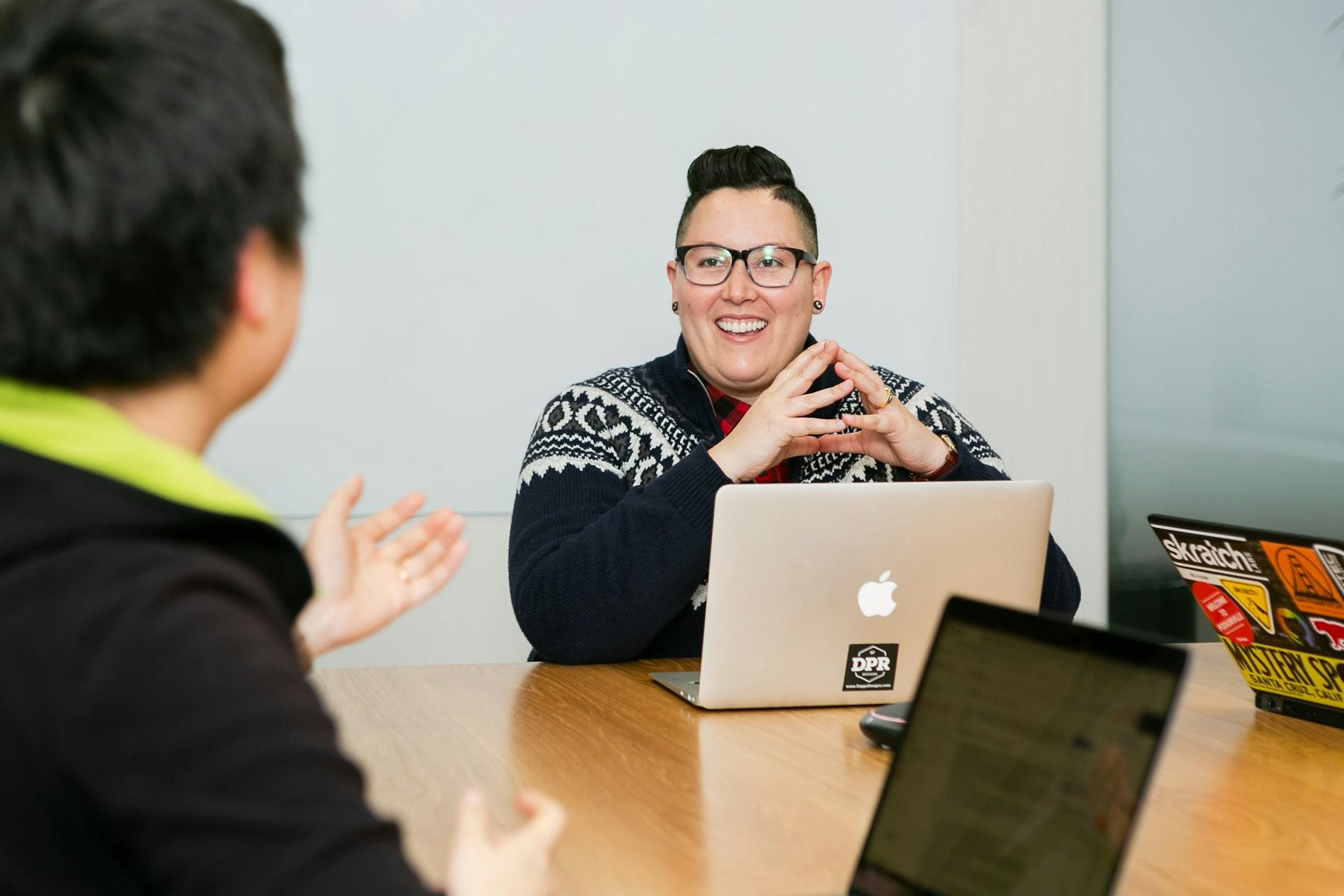
Candidate demonstrating skills during inclusive interview with laptop and materials.

Skills-based assessment flips the focus. Instead of asking “how well can they talk about the job?”, we ask “how well can they do the job?”.

It is more inclusive by design. Candidates who may not fit a stereotypical picture of confidence – introverts, people from cultures where self-promotion is discouraged, neurodiverse candidates – get a fairer shot.

It is also harder for bias to creep in. When you have tangible evidence of someone’s work, you are less likely to be swayed by irrelevant cues such as accent, body language, or conversational polish.

One hiring manager once told me, “The skills test stopped me from passing over someone I might have ignored. They weren’t flashy in the interview, but their work blew us away.” That’s exactly the point.

What skills demonstration looks like in practice

The right format depends on the role.

For a software engineer, it might mean solving a live coding problem with the tools they would actually use on the job.

For a marketing candidate, it could be developing a short campaign plan based on a realistic brief.

For leadership roles, you might run a scenario exercise where the candidate handles a fictional but challenging team situation.

The golden rule: keep it relevant. Don’t throw in abstract puzzles or games that measure test-taking skills more than job ability.

And make sure it is standardised. Give every candidate the same instructions, the same resources, and the same amount of time. Use a scoring rubric that focuses on job-relevant criteria – not presentation flair.

Making it fair for all candidates

A skills demonstration can be inclusive – or not – depending on how it is designed. Accessibility is non-negotiable.

If the task involves technology, check it works for people with disabilities. If you expect candidates to present verbally, offer an alternative for those with communication differences.

Some candidates will produce stronger work if they can review the brief in advance rather than on the spot.

This simple step can make a huge difference for neurodiverse candidates or those who are less familiar with high-pressure assessment environments.

Small adjustments can open the door for talent you might otherwise miss.

How it connects to earlier tips

This tip builds directly on Tip #2 (AI screening with bias safeguards) and Tip #3 (blind CV screening). Those steps help you get the right people into the interview process without bias filtering them out too early.

Once they’re there, skills demonstration ensures you make your decision based on what really matters – their ability to do the job.

It also works hand-in-hand with Tip #4 (diverse interview panels). When multiple panel members watch a skills demonstration, each will notice different strengths or gaps. That gives you a richer, more balanced view of the candidate’s capabilities.

Measuring the impact

Want to prove this approach works? Track it.

Compare the performance of hires who scored highly on skills demonstrations with those who simply interviewed well. Look at retention. Look at diversity in the hires you make.

If you are doing it right, you’ll likely see stronger job performance, better retention rates, and a broader range of talent joining the team.

Final thought

Interviews will always have their place. They’re great for understanding motivation, communication style, and culture fit. But they are not enough on their own.

When you shift more of the weight to skills demonstration, you’re making recruitment both fairer and more accurate.

And you send a powerful message to candidates: we value what you can do over how well you can perform in a staged conversation.

That’s how you hire people who not only talk the talk – they walk the walk.

Register for our online Inclusive Recruitment course.

Or contact us for tailored support.


Steven Asnicar headshot

Steven Asnicar

Steven is a seasoned executive with over 25 years of experience in corporate leadership, consulting, strategic human resources, and executive search.

As CEO and visionary of DE&I consulting and training firm Diversity Australia, he is at the forefront of revolutionising how organisations across Australia and New Zealand attract, select, and onboard talent through the Inclusive Recruitment Program.

Before founding Diversity Australia, Steven established and successfully led Urban Executive, a specialist executive search and recruitment firm. Through this venture, he gained profound insights into the critical role of DE&I in recruitment and implemented strategies to foster inclusive hiring practices.

Steven has worked closely with Boards, C-suite executives, and teams, offering expertise in leadership development, strategy, succession planning, and executive assessment. His passion for building diverse and inclusive workplaces through innovative, data-driven solutions has positioned him as a thought leader in DE&I, earning over 26,000 followers on his LinkedIn profile, https://au.linkedin.com/in/steven-asnicar.

Steven holds a Masters of International Business specialising in Human Capital Management from Bond University, a Graduate Certificate of Corporate Management from Deakin University, and a Bachelor of Business from the University of Queensland. He is also a graduate of the Global Institute of Directors and a qualified RABQSA Auditor.

Discover more about our key team of consultants and trainers at https://inclusiverecruitment.com.au/our-team.

Inclusive Recruitment Program:

Revolutionising Diversity, Equity, and Inclusion in Hiring

WE CHAMPION INCLUSION IN RECRUITMENT:The Inclusive Recruitment Program is a service and training offering of Diversity Australia designed to transform the way organisations attract, select, and onboard talent.

We believe that by embracing DE&I in the recruitment process, companies can build dynamic, high-performing teams that drive innovation and success.

EMPOWERING ORGANISATIONS TO BUILD DIVERSE WORKFORCES:Our mission is to redefine the way companies approach recruitment by promoting inclusive hiring practices that prioritise skills, potential, and diversity. We help organisations create a work environment where every individual feels valued, respected, and empowered to succeed.

EXPERIENCE & EXPERTISE YOU CAN TRUST:

  • Led by CEO Steven Asnicar, an experienced executive with expertise in strategic human resources, recruitment, and DE&I;
  • Team of over 10 highly qualified consultants, each holding advanced degrees and bringing vast industry experience to the table;
  • Alignment with Global ISO Diversity and Inclusion Standards, Australian Inclusive Service Standards (ISS), and ASX Corporate Governance Council’s Corporate Governance Principles and Recommendations for DE&I;
  • Training content researched and authored by subject matter experts, validated across our diverse senior team;
  • Proven track record of helping organisations in various industries build diverse, equitable, and inclusive workplaces.

Contact Us Here >

Recent Posts

Our Courses

A professional woman leading an inclusive recruitment training session, speaking to a group of executives in a boardroom setting.

Executive Level Program

The Executive-Level Inclusive Recruitment Program equips leaders to identify and remove bias from key processes like hiring, talent management, succession planning, and performance reviews.

It starts with inclusive leadership foundations, then tackles how bias impacts recruitment decisions, internal promotions, and performance assessments.

The focus is on practical strategies to build fairer, more inclusive systems that recognise talent on merit, not assumptions.

Managers participating in an inclusive recruitment training session, seated around a table in a collaborative office environment.

Manager Level Program

The Manager-Level Inclusive Recruitment Program gives managers the tools to build fair and inclusive team practices across recruitment, development, and performance.

It focuses on how bias can influence everyday decisions, from shortlisting candidates to choosing who gets opportunities to grow. Managers learn how to structure interviews, give fair feedback, and support progression based on merit.

The program helps managers lead diverse teams with consistency, fairness, and accountability.

Company supervisors engaging in an inclusive recruitment program workshop, wearing lanyards and participating in a group discussion.

Supervisor Level Program

The Supervisor-Level Inclusive Recruitment Program helps frontline leaders build fairer, bias-aware practices in everyday decision-making, from hiring to team management.

It focuses on practical skills: making merit-based hiring decisions, supporting team diversity, and recognising leadership potential without defaulting to personal bias.

Supervisors walk away with the tools to lead inclusively and create a more equitable workplace from the ground up.

Inclusive Recruitment Training
Privacy Overview

This website uses cookies so that we can provide you with the best user experience possible. Cookie information is stored in your browser and performs functions such as recognising you when you return to our website and helping our team to understand which sections of the website you find most interesting and useful.